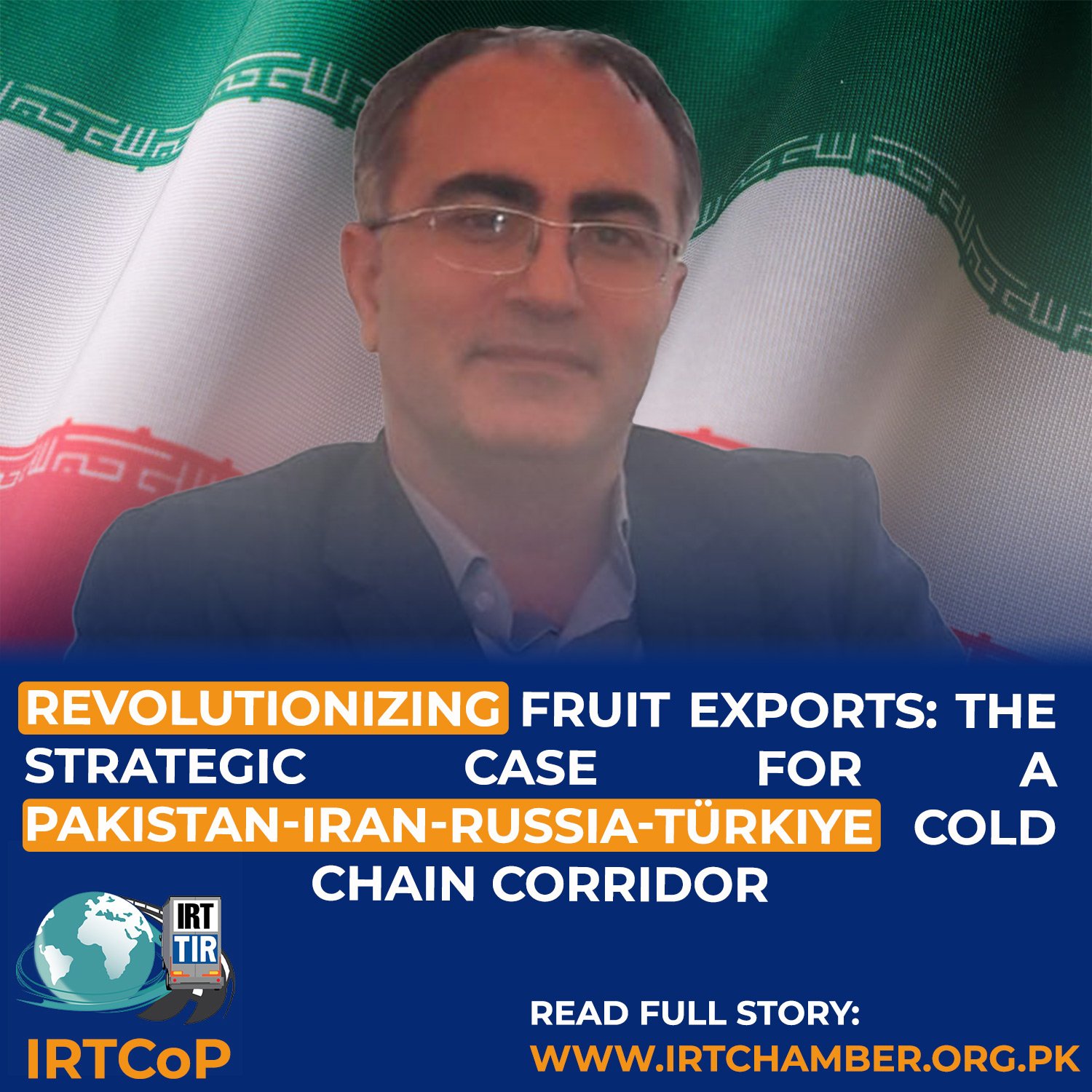
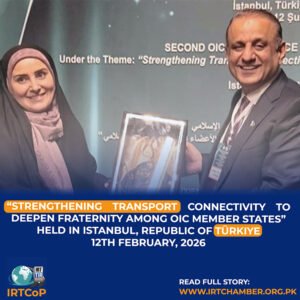
“This article has been written by the Honorable Sir Akbar Khodaei, who has served for an extensive period as the Director of Transport and Communication at the ECO Secretariat. A steadfast advocate for regional trade, cooperation, and harmony among ECO member states, Sir Khodaei is also a devoted well-wisher of Pakistan. In this thought-provoking article, he proposes a strategically sound and economically promising “Fruit Corridor” for Pakistan. His vision reflects a deep commitment to regional development and integration. The President of IRTCoP highly commends and fully supports this forward-thinking proposal”.
The Strategic Imperative of Establishing a Cold Chain Corridor: Pakistan’s Fruit Exports to Russia and Türkiye via Iran, Pakistan’s agricultural sector, particularly its fruit industry, holds immense untapped potential. With annual fruit production exceeding 7.5 million metric tons, post-harvest losses due to inadequate storage and transportation infrastructure account for 30–40% of total yield. Establishing a cold chain logistics network through Iran to access Russian and Turkish markets is not just an economic opportunity—it is a necessity for sustainable growth, regional cooperation, and food security.
1. Economic Necessity for Pakistan
A. Reducing Post-Harvest Losses
Current Scenario: Without temperature-controlled logistics, perishables like mangoes, citrus fruits, and grapes spoil rapidly.
Cold Chain Impact: Implementing refrigerated transport could reduce losses by 70%, adding USD500million–1billionUSD annually to Pakistan’s export revenue.
B. Market Diversification
Dependence on Traditional Markets: Over 60% of Pakistan’s fruit exports target the Middle East. Russia and Türkiye represent high-value, unsaturated markets.
Russian Demand: Russia imports USD3.2billion in fruits annually, relying heavily on sanctions-affected European suppliers. Pakistani kinnows and mangoes could fill this gap.
Türkiye’s Gateway Role: Türkiye’s strategic position allows re-export to the EU and Central Asia, amplifying Pakistan’s reach.
2. Iran’s Geostrategic Role
A. Shortest Land Route
Distance Savings: The Iran-Pakistan border (e.g., Taftan-Mirjaveh crossing) reduces transit time to Russia by 40% compared to sea routes via the Suez Canal.
Existing Infrastructure: Iran’s Chabahar Port and the International North-South Transport Corridor (INSTC) offer pre-built logistics frameworks.
B. Diplomatic Synergies
Pakistan-Iran Relations: Recent agreements to upgrade the Quetta-Taftan railway and harmonize customs procedures simplify cross-border cold chain operations.
Sanctions Mitigation: Iran’s improving ties with Russia and Türkiye create a politically viable transit route despite U.S. sanctions.
3. Benefits for Target Markets
A. Russia’s Agricultural Deficit
Climate Limitations: Russia’s temperate climate restricts tropical fruit production, creating year-round demand for imports.
Price Competitiveness: Pakistani fruits are 20–30% cheaper than Latin American alternatives due to lower labor costs.
B. Türkiye’s Re-Export Hub
Value Addition: Turkish companies could repackage Pakistani fruits with EU-compliant labeling for premium markets.
Seasonal Complementarity: Türkiye’s apple and citrus production declines in summer, aligning with Pakistan’s harvest cycles.
4. Operational Blueprint
A. Infrastructure Requirements
Refrigerated Warehouses: At nodal points (Karachi, Quetta, Zahedan).
Temperature-Controlled Trucks: GPS-enabled vehicles with real-time monitoring.
Energy Solutions: Solar-powered cold storage to offset Iran’s erratic electricity supply.
B. Multilateral Collaboration
Tripartite Agreements: Standardized phytosanitary certifications and joint investment in border facilities.
Technology Transfer: Turkish cold chain expertise (e.g., Bursa’s fruit cluster) paired with Russian financing.
5. Challenges and Mitigation
| Challenge | Solution |
|---|---|
| High Initial Investment | Public-private partnerships (PPPs) with IMF/World Bank support |
| Regulatory Fragmentation | Digital “Single Window” customs system |
| Security Risks in Iran | UN-monitored insurance schemes for cargo |
Conclusion
A Pakistan-Iran-Russia-Türkiye cold chain corridor is a geopolitical and economic imperative. It transforms Pakistan from a raw commodity supplier into a value-chain stakeholder while strengthening regional food resilience. With 2030 global cold chain demand projected to grow by 8% annually, delayed action risks ceding market share to stakeholder competitors. The time for strategic investment is now.
Recommendation: Pakistan should prioritize bilateral talks with Iran to fast-track cross-border cold chain pilot projects, leveraging China’s CPEC investments for technology spillovers.