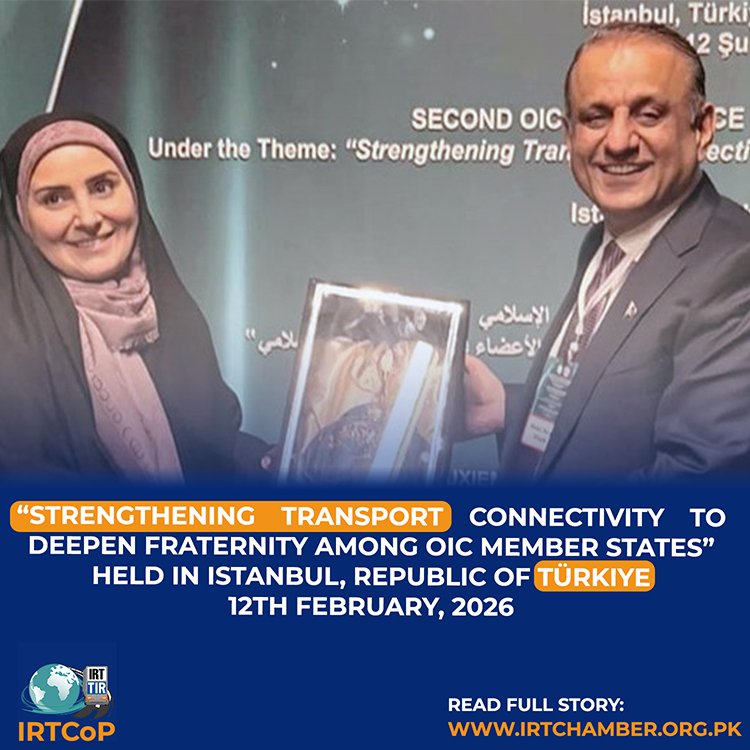
“STRENGTHENING TRANSPORT CONNECTIVITY TO DEEPEN FRATERNITY AMONG OIC MEMBER STATES”
HELD IN ISTANBUL, REPUBLIC OF TÜRKIYE 12TH FEBRUARY, 2026
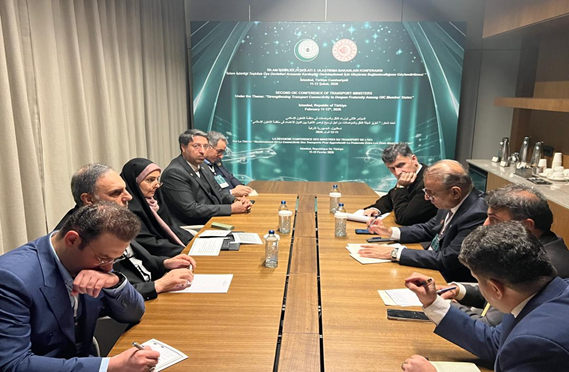
The 2nd OIC Conference of Transport Ministers (OICCTM) under the theme “Strengthening Transport Connectivity to Deepen Fraternity among OIC Member States” was held in Istanbul, Republic of Türkiye, on 12th February, 2026.
The Senior Officials Meeting (SOM), preparatory to the 2nd OICCTM, was held in Istanbul on 11th February, 2026.
Ministers and Heads of Delegation from OIC Member States, OIC institutions, regional and international organizations participated at the Conference.
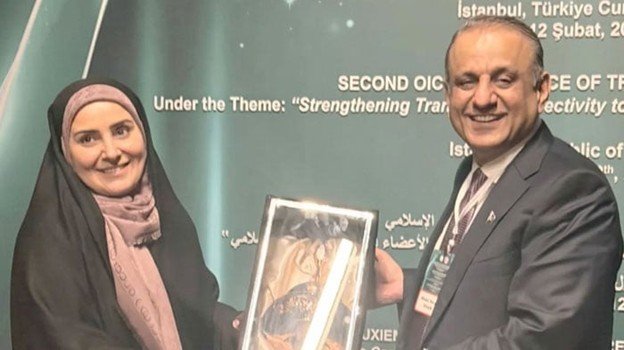
Federal Minister for Communications Abdul Aleem Khan on Friday (February 13, 2026) held separate high-level meetings with the transport minister of Iran, focusing on enhancing transport, logistics, and bilateral connectivity among Pakistan, Iran.
The meetings took place on the sidelines of the 2nd OIC Transport Ministers’ Conference in Istanbul, where Abdul Aleem Khan met with Iran’s Minister for Roads and Infrastructure, Farzaneh Sadegh.
Resolution of Meeting (Key Notes)
Quote:
Urges Member States to develop and implement sustainable transport policies and strategies aligned with national policies and the OIC Program of Action in particular to increase investment in transport and logistics infrastructure, including through various innovative financing methods such as public-private partnerships towards developing efficient multimodal and integrated transport systems;
Calls upon the OIC Member States to take into consideration the evidence-based findings and policy-oriented recommendations contained in the SESRIC report entitled “Transportation for Development in OIC Member Countries: Implications for Trade and Tourism & Challenges for Landlocked Countries” in the formulation and implementation of their national and regional transport policies, strategies and investment programmes, with a view to addressing infrastructure and connectivity gaps across transport modes, responding to the specific challenges faced by Landlocked OIC Member Countries, enhancing connectivity, reducing transport and trade costs, and promoting sustainable and resilient transport systems;
Unquote:
Founder President IRT Chamber Rana Asif Khan says the conference marks a historic revival of transport cooperation after decades and signals a new era of connectivity among OIC countries. He welcome the outcomes of the 2nd OIC Transport Ministers Conference in Istanbul, which emphasized stronger transport integration across the Islamic world.
He specially welcomed the meeting between Federal Minister for Communications Abdul Aleem Khan with Iran’s Minister for Roads and Infrastructure, Farzaneh Sadegh where both dignities focused on enhancing transport, logistics, and bilateral connectivity among Pakistan, Iran.
Pakistan–Iran–Saudi Arabia Passenger Bus Service.
IRT Chamber President recalled the Iranian President Masoud Pezeshkian’s vision to have a Pakistan–Iran–Saudi Arabia Passenger Bus Service. He added the platform of OIC Transport Ministers can be an instrumental to build this vision. He said IRT Chamber already working to operate Pak-Iran passenger bus service in collaboration with Iranian Partner “Parto Sair Bus Company”, and both partners are ready to extend their service up to Saudi Arabia.
The proposed bus service linking Pakistan, Iran and Saudi Arabia represents a new era of people mobility across the Islamic world, complementing freight corridors with human connectivity. The Bus Service will frame:
- Historic people-to-people corridor
- Facilitates Ziyarat & Umrah travel
- Promotes tourism and trade
- Affordable regional mobility
- Cultural integration
- Safe land travel
- This creates a human dimension to logistics diplomacy. Symbol of OIC unity.
ITI Corridor (Istanbul–Tehran–Islamabad)
Rana Asif Khan further highlighted that operationalization of the Istanbul–Tehran–Islamabad Corridor (ITI) will be a breakthrough for OIC Regional Trade. ITI will cuts cost and time vs sea transport from 35 days to 10 days. ITI can connects South Asia → Middle East → Europe creating fastest land bridge for trade. ITI can matter;
- First step toward multi-modal integration
- Supports OIC trade integration goals.
- Backbone of OIC economic corridor.
- Gateway to Central Asia and Europe.
- Complements TIR road transport.
IRT Chamber Suggested Role of Framework.
Governments create corridors; the private sector makes them operational. Transport ministers emphasized corridors and facilitation; IRT Chamber as the private-sector implementation partner for OIC Connectivity can delivers execution on:
- Support TIR adoption
- Harmonize transport procedures
- Connect public & private stakeholders
- Mobilize transport companies
- Pilot TIR operations on ITI
- Facilitate customs cooperation
- Provide logistics research & policy input
Suggested Phrase:
- Launch of Pakistan–Iran–Saudi Bus Initiative.
IRT Chamber proposes practical steps First OIC Passenger Road Corridor.
- Feasibility study
- Route planning
- Border facilitation
- Insurance & visa facilitation
- Public-private partnerships
- Promote TIR & Cross-Border Facilitation
IRT Chamber can tie into broader connectivity agenda:
- Train operators
- Develop logistics corridors (ITI, ECO routes & OIC Passenger Road Corridor )
- Support digitalization & customs cooperation
- Build OIC Logistics Business Network.
IRT Chamber Offer to:
- Establish OIC logistics forum
- Host corridor working groups
- Organize trade missions
- Promote multimodal transport (road + rail + sea)
IRT Chamber Vision Statement
The Islamic world stretches from Asia to Africa and Europe. If we connect our roads, railways and people, we connect our future. IRT Chamber stands ready to work with OIC member states to transform these historic decisions into real trucks on roads, trains on rails and buses carrying our people across borders.