Pakistan Grants FI Waiver for Iran Trade: A Timely Gesture of Goodwill
March 27, 2026
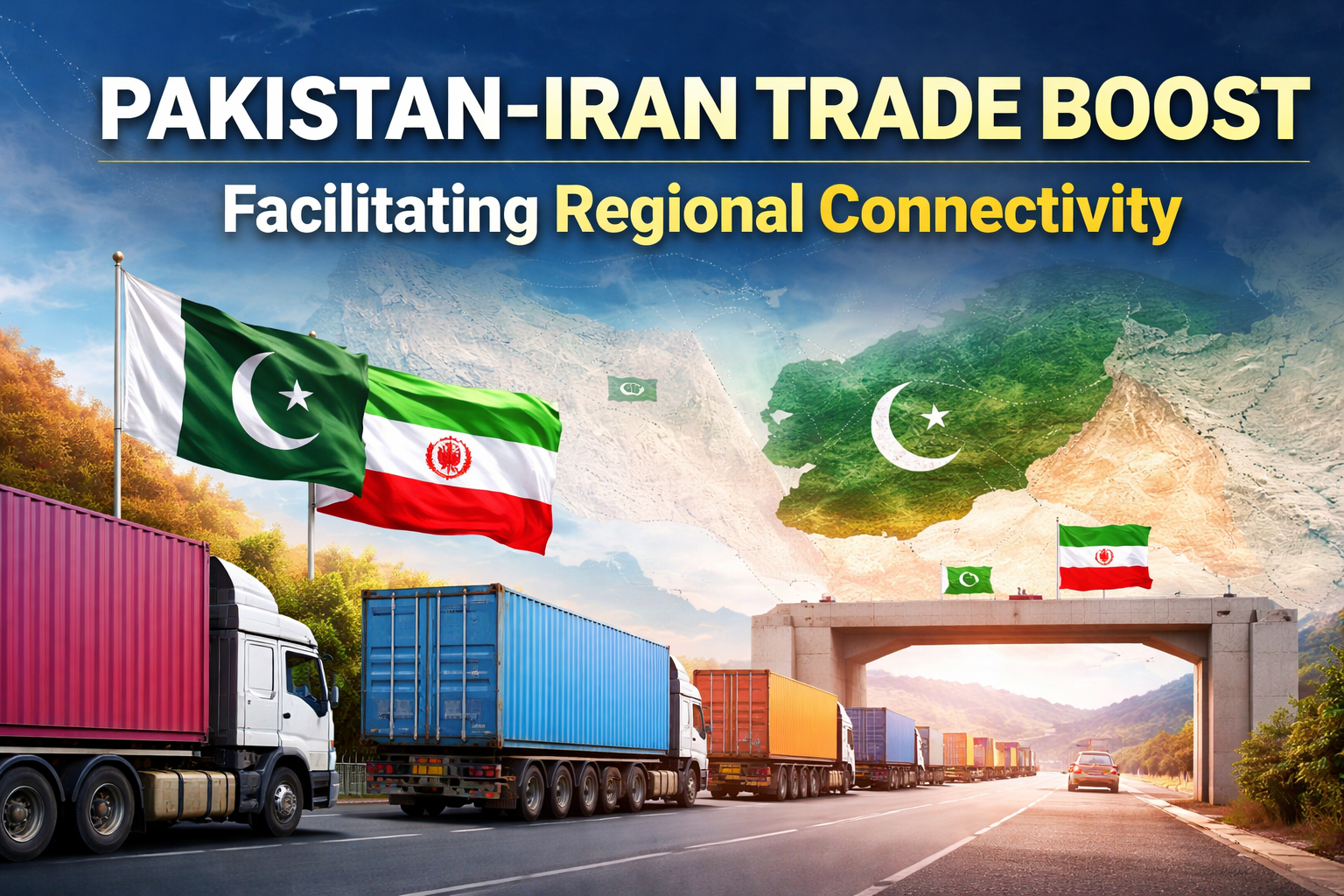
In a significant development reflecting both foresight and solidarity, the Government of Pakistan has granted a temporary exemption from the Financial Instrument (FI) requirement for exports to the Islamic Republic of Iran and onward to Central Asian Republics via the Iran land route.
This decision is not merely an economic measure it represents a thoughtful and timely gesture of goodwill by Pakistan toward its neighbor Iran, ensuring that vital trade can continue even in challenging times. It underlines Pakistan’s commitment to supporting regional partners, reducing barriers for essential goods, and fostering resilience in cross-border commerce.
Facilitating Trade at a Critical Time
Historically, the FI requirement posed hurdles for exporters dealing with markets where conventional banking and settlement mechanisms are limited. For Pakistan-Iran trade, these regulations often complicated the timely delivery of essential and perishable goods, creating unnecessary delays and logistical challenges.
By introducing this waiver, Pakistan has:
- Enabled smoother and faster export operations
- Reduced dependency on cumbersome financial documentation
- Created room for practical and alternative trade solutions
- Encouraged exporters to engage actively with Iranian markets
This move is particularly important for essential commodities, perishable items, and life-sustaining goods, which require swift and uninterrupted movement across borders.
Iran: Pakistan’s Neighbor and a Vital Trade Partner
Iran serves as a critical gateway for Pakistan to access Central Asia, providing a natural corridor linking South Asia with multiple emerging markets. This route is indispensable not only for trade efficiency but also for sustaining long-term regional economic integration.
Amid the current regional uncertainties, Pakistan’s decision sends a clear message: we stand with Iran, supporting continued trade and supply chains despite challenging circumstances.
The FI waiver complements the ongoing efforts by both countries to expand bilateral trade, streamline connectivity, and strengthen logistical frameworks.
Appreciation for Iran’s Role
Pakistan also acknowledges and appreciates Iran’s resilience and commitment in keeping trade routes operational, even under external pressures and regional instability. By ensuring that cross-border trade remains possible, Iran demonstrates both steadfastness and cooperation, making the corridor reliable for all stakeholders.
This policy decision by Pakistan highlights the deep historical, cultural, and economic ties shared by the two nations, emphasizing not just trade but brotherhood, mutual support, and regional solidarity.
A Gesture of Goodwill During Regional Challenges
The timing of this policy is particularly notable. Regional instability and geopolitical complexities have created a difficult environment for trade, logistics, and economic planning. By relaxing the FI requirement, Pakistan has:
- Ensured continuous supply of essential goods to Iran
- Provided practical relief for traders and exporters
- Demonstrated solidarity and friendship
- Reinforced regional stability through economic cooperation
This decision is a tangible reflection of Pakistan’s commitment to acting as a supportive and reliable neighbor, strengthening ties beyond mere commerce.
Strengthening Trust and Long-Term Cooperation
Trade facilitation during challenging times goes beyond immediate economic gains—it builds trust and deeper cooperation between nations. Pakistan and Iran, sharing a long border and historic ties, are positioned to develop stronger collaborations in sectors such as agriculture, energy, logistics, and cross-border infrastructure.
By prioritizing facilitation and goodwill, Pakistan has sent a clear signal: it is ready to support its neighbor in practical ways, reinforcing both trade and friendship.
Looking Ahead: Sustaining Regional Trade Connections
The FI waiver is part of a broader vision to establish more flexible, regionally aligned trade frameworks. Pakistan’s policy ensures that trade flows continue smoothly while strengthening regional solidarity and economic cooperation.
Moving forward, opportunities include:
- Simplified and structured trade processes
- Expansion of barter or alternative settlement systems
- Development of infrastructure and border logistics
- Strengthening cross-border business partnerships
With Iran serving as a central transit hub, this gesture from Pakistan not only facilitates immediate trade but also lays the foundation for sustainable regional connectivity and long-term shared prosperity.
Conclusion
The Financial Instrument exemption is more than regulatory relief—it is a demonstration of Pakistan’s commitment to friendship and support for Iran during difficult times. It reflects a spirit of regional solidarity, practical diplomacy, and economic cooperation.
By enabling trade to continue uninterrupted, Pakistan is reinforcing trust, goodwill, and mutual respect, which are vital for long-term growth, stability, and prosperity in the region. This thoughtful policy decision highlights that true economic cooperation is rooted not only in strategy but in supporting neighbors when it matters most.