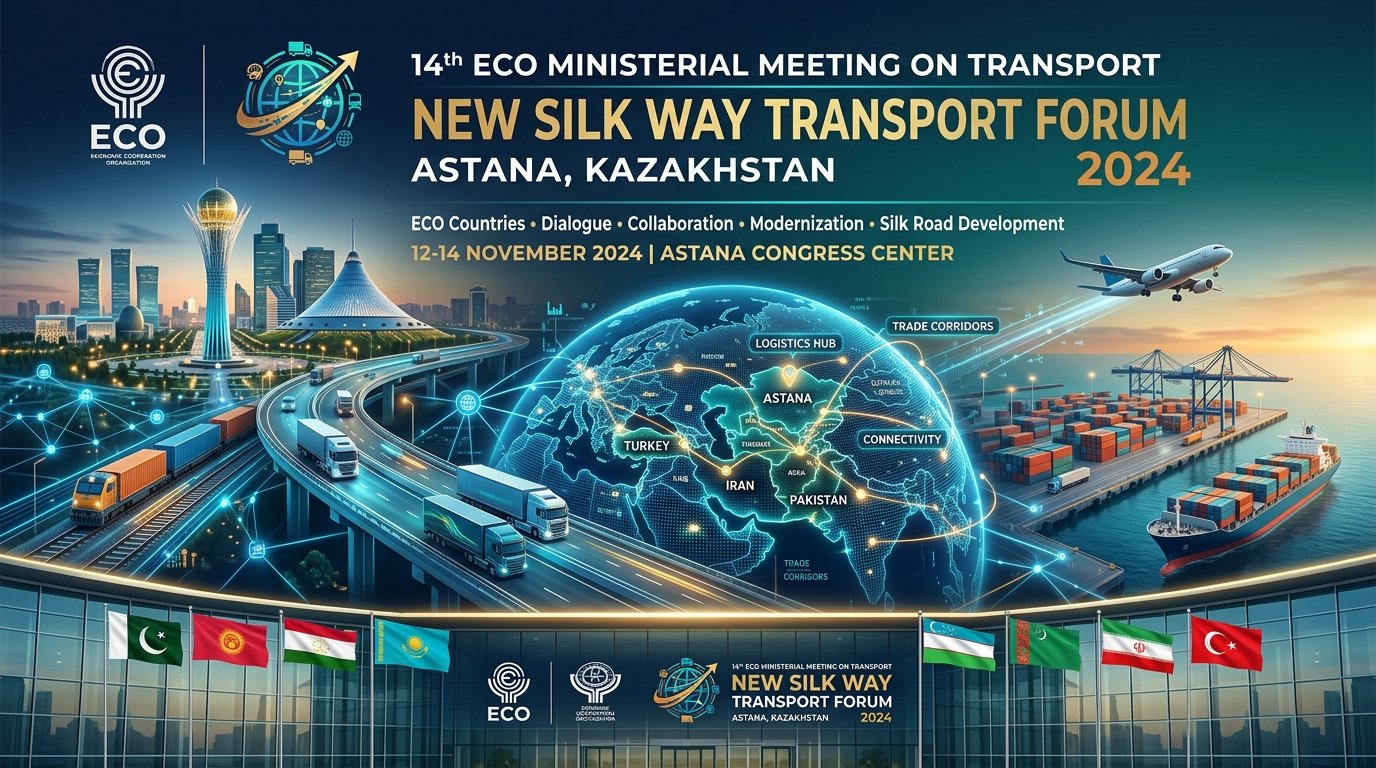
IRT Chamber Representing Pakistan at the 14th ECO Ministerial Meeting on Transport
Convened alongside the New Silk Way Transport and Logistics Forum in Astana, Kazakhstan (October 14–16, 2026). President Rana Asif Khan leads the national private-sector road transport delegation to spearhead digitalization (eTIR & e-Permit), corridor modernization, and multilateral infrastructure financing.
Official Nomination by the Government of Pakistan
Recognizing IRT Chamber's role in advancing international transit facilitation, the Ministry of Communications formally designated the Chamber to represent Pakistan's private transport sector.
High-Level Ministerial Mandate from Islamabad to Astana
Pursuant to ECO Secretariat Note Verbale No. TC/2026/1052 and Ministry of Foreign Affairs (MOFA) Letter No. ECO-1/2/2025, the Ministry of Communications (MOCM), Government of Pakistan, issued an urgent directive nominating key institutions to form Pakistan's private-sector delegation for the 14th ECO Ministerial Meeting on Transport and the New Silk Way Forum.
The Ministry requested the nomination of Rana Asif Khan, President of the International Road Transport (IRT) Chamber of Pakistan, to participate in the exclusive Private Sector Implementation Session on 15 October 2026 in Astana, Kazakhstan, alongside senior government dignitaries and international ministers.
Official Transmission
Signed by Shahbaz Latif Mirza, Director (Road Transport), Ministry of Communications, Islamabad.
View Circular PDFNominated Private-Sector Bodies from Pakistan:
National Logistics Corporation (NLC)
Director General, NLC, Rawalpindi — representing state-backed strategic freight logistics and heavy fleet operations.
PNCICC (Karachi)
Pakistan National Committee of the International Chamber of Commerce — representing broader international commerce and trade policies.
IRT Chamber of Pakistan
Rana Asif Khan, President — representing Pakistan's commercial road transport operators, TIR carriers, and cross-border transit logistics.
The Private Sector Implementation Session
Organized on 15 October 2026 (15:40 – 17:30) as an independent market platform designed to turn Ministerial political declarations into bankable projects.
Eight Industry Seats Shaping the ECO Transport Agenda
The session strictly eschews generic speeches. Each principal participant delivers a focused 3-to-4 minute intervention with a single substantive slide formatted as: Problem → Solution → Geography → Required Financing → KPI.
The Three Core Thematic Blocks
IRT Chamber's strategic intervention addresses the fundamental constraints of cross-border trade, presenting actionable solutions across all three session blocks.
Infrastructure & Corridors
Eliminating structural and administrative bottlenecks along vital trade arteries including the Islamabad–Tehran–Istanbul (ITI) corridor and the PCKU route.
- Slashing border dwell times from 48–72 hours to under 6 hours via coordinated border management (CBM).
- Multimodal integration linking Karachi, Port Qasim, and Gwadar to Central Asian landlocked markets.
- Corridor-wide KPIs: commercial transit speed, schedule reliability, and freight cost per ton-km.
Digitalization & Paperless Transit
Implementing interoperable digital solutions that eliminate delays without creating isolated software silos, respecting national data sovereignty.
- Full deployment and bilateral recognition of eTIR electronic customs guarantees across ECO borders.
- Digitalization of international road transport permits (e-Permit) and electronic consignment notes (e-CMR).
- Unified digital shipment tracing and real-time corridor telemetry with SAQTAN AI integration.
Bankability & Scaling Finance
Establishing bankable Public-Private Partnership (PPP) structures and preparing project pipelines for the International Financing Conference in July 2027.
- Project finance and blended finance for modern dry ports, bonded logistics hubs, and green fleet renewal.
- Outcome-based financing tied to verified throughput and dwell-time reductions.
- Standardized concession templates scalable across all 10 ECO Member States.
Cross-Border Digital Road Transit & Fast-Track Corridor Pilot (2027–2028)
IRT Chamber's submitted proposal focuses on establishing an expedited digital transit corridor connecting Pakistan, Iran, Turkey, and Central Asian republics. By unifying eTIR, e-Permit, and electronic border pre-declarations, the pilot targets an immediate 70% cut in border clearance time and a 25% decrease in overall freight costs for commercial operators.
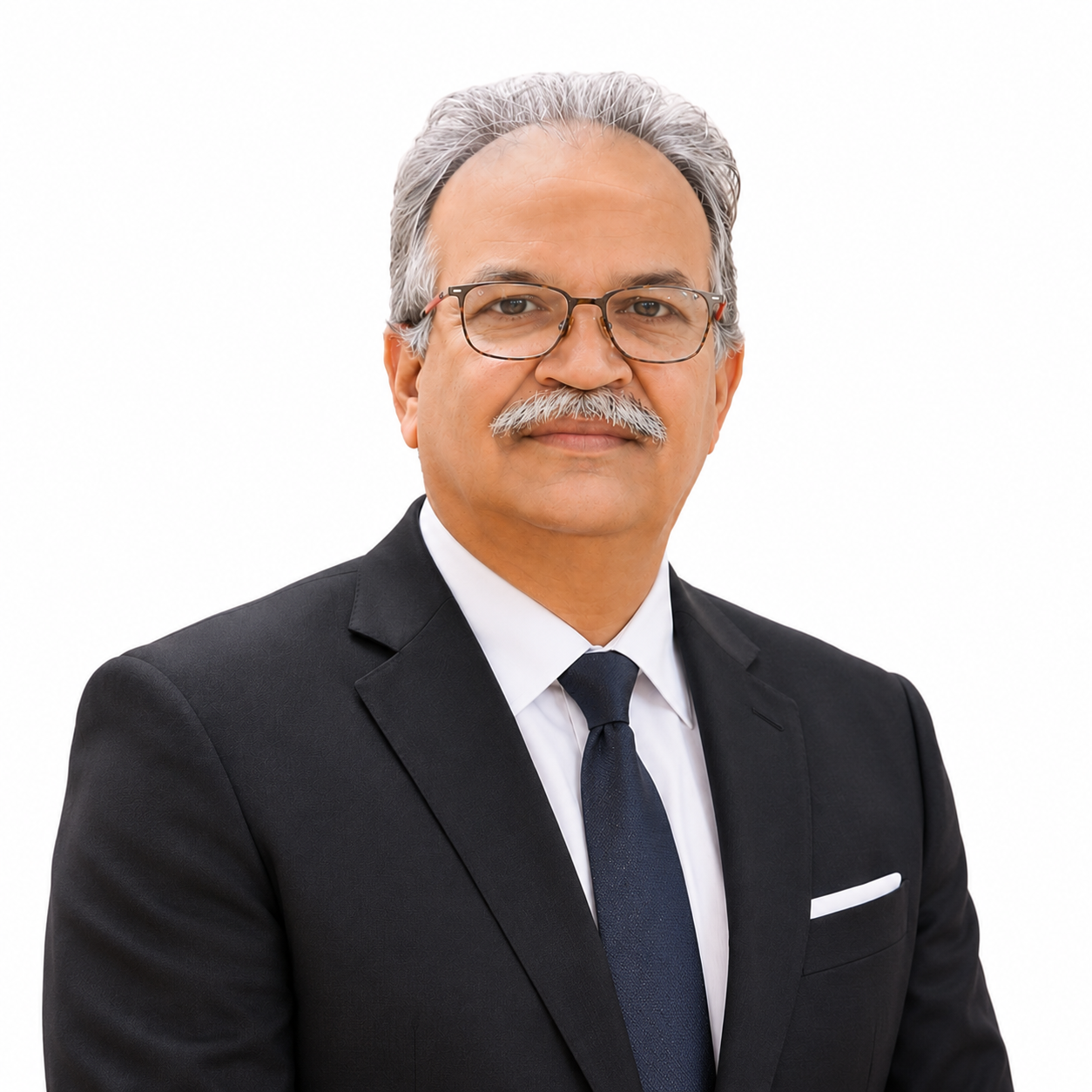
Rana Asif Khan
President, International Road Transport (IRT) Chamber of Pakistan
"Pakistan sits at the indispensable crossroads of South Asia, the Middle East, and Central Asia. Our mission in Astana is to deliver practical, market-driven mechanisms: operationalizing eTIR, eliminating paper-based border delays, and creating secure, bankable trade corridors that empower our transporters and connect the ECO region."
Official Conference Documents & Transmissions
Access and download the official working documents, circulars, and concept papers regarding the 14th ECO Ministerial Meeting and Private Sector Implementation Session.
Concept Paper: Private Sector Implementation Session
"Dialogue with private sector on digitalization and financing of the ECO transport sector". Details purpose, the 8 principal industry seats, agenda blocks, speaking rules, and proposal submission form.
Govt of Pakistan Official Nomination Letters
Official correspondence comprising Ministry of Communications Circular No. 9(71)/2000-RT, MOFA Letter No. ECO-1/2/2025, and ECO Secretariat Note Verbale No. TC/2026/1052 nominating IRT Chamber.
Frequently Asked Questions
Key insights regarding the 14th ECO Transport Ministerial Meeting, regional road transit frameworks, and IRT Chamber's role in Astana.
Advancing Pakistan's Global Logistics Leadership
Connect with the IRT Chamber secretariat for inquiries regarding regional transit routes, bilateral transport permits, or ECO corridor developments.